I am a Ph.D. candidate at the John Hopcroft Center for Computer Science, Shanghai Jiao Tong University, advised by Prof. Shuai Li (李帅). From January to June 2026 I was a visiting research intern at the School of Computing, NUS, supervised by Prof. Xiaokui Xiao (IEEE Fellow), funded by 国家留学基金委人工智能卓越专项. I am currently a research intern at NaiveAI, working on auto-research, long-horizon agents and self-evolution.
My research focuses on diffusion model mechanisms — including pretraining, supervised fine-tuning, RL post-training and sampling — and reinforcement learning, with RL post-training applied to 3D and video generation (Tencent Rhino-Bird, Meituan Longcat-Video), and increasingly on long-horizon agents and multi-agent auto-research. I created ARIS — Auto Research in Sleep, an open-source long-horizon multi-agent auto-research platform (HuggingFace Daily Papers #1, VALSE 2026 talk).
I expect to graduate in 2027 and am looking for industrial research positions. If you're interested, please feel free to reach out via email or WeChat (yrf13618645542).
Research Experiences
Research Intern at NaiveAI— auto-research, long-horizon agents and self-evolution · 2026-06 – present
Research Intern at Meituan · Longcat-Video Team— 美团北斗人才计划 · 2025-06 – 2025-12
Research Intern at Tencent IEG— 犀牛鸟精英人才计划 (Rhino-Bird Elite Program) · 2024-03 – 2024-09
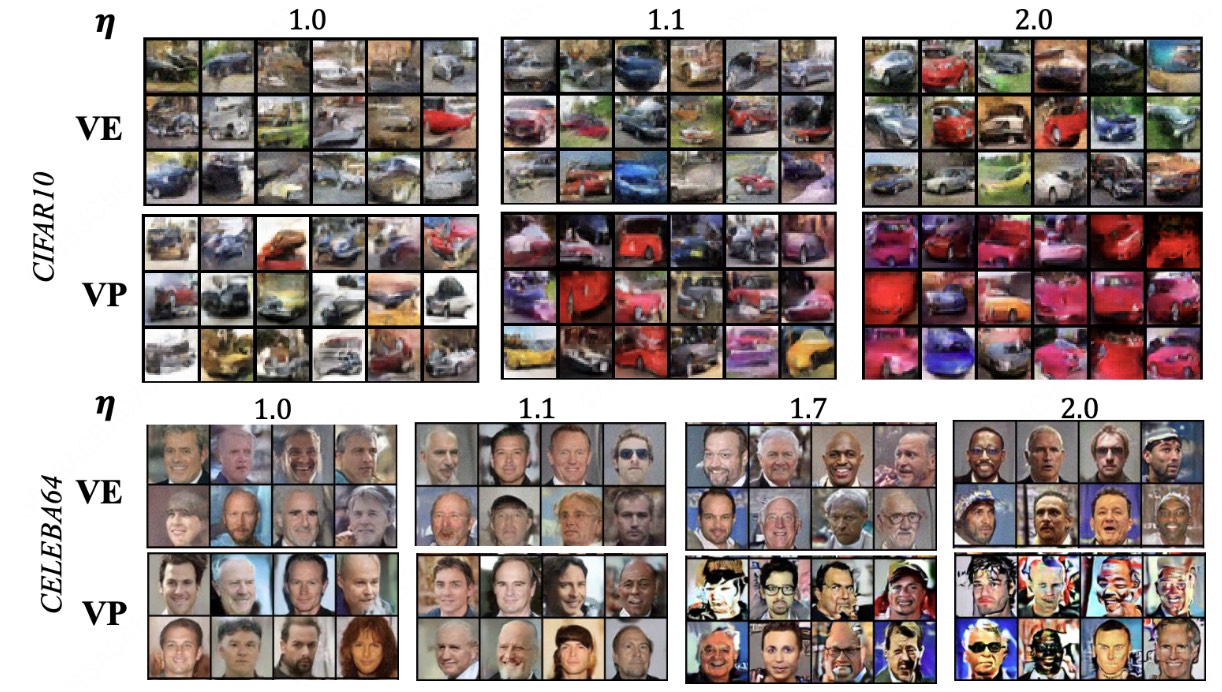
Why Rectified Flow is Better? Elucidating VP, VE, and RF-based Diffusion Models— CSML 2025, 2025
Few-Shot Diffusion Models Escape the Curse of Dimensionality— TongAI 2025 (Best Paper, 2nd Prize), 2025
ARIS — Auto Research in Sleep
Lightweight Markdown-only skills for autonomous ML research — cross-model adversarial review loops, idea discovery, and full experiment automation. No framework, no lock-in.
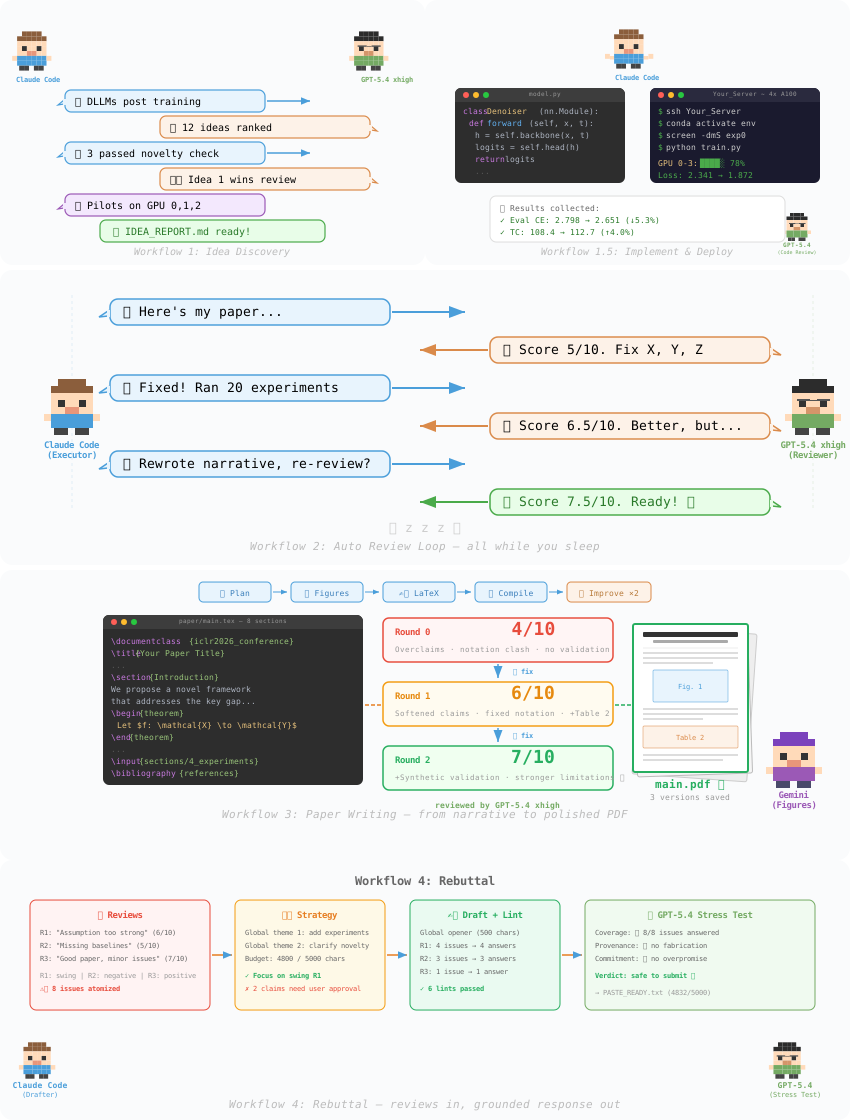
An open-source AI research-agent platform: a primary LLM (Claude / GPT / Kimi / …) drives the full ML research lifecycle — idea discovery, experiment design, paper writing, rebuttals — while a different-family reviewer model (e.g. GPT-6-Astra xhigh via Codex MCP) adversarially audits every step. All expressed as plain Markdown SKILL.md files with zero framework lock-in.
Sub-projects:
ARIS-Code — Standalone CLI runtime — multi-provider, no Claude Code dependency required.
ARIS-Anything — Generalize the ARIS loop from 科研 to 研究 (investment DD, legal, journalism, post-mortems).
ARIS-in-AI-Offer — Bilingual ML/LLM/diffusion/agent interview cheat sheets and long-form blogs, generated by ARIS.
ARIS-Movie-Director — Agentic long-horizon visual generation: a rough story → a cross-model-audited image-based movie.
ALIGN — Agentic loop image generation without diffusion or autoregressive image models: coding agents draw in p5.js and refine through visual review.
Anti-Autoresearch — The dual of ARIS: reviewer-side integrity forensics for autoresearch papers.
HERO-Anti-OverDefense — A paste-in contract that stops coding agents from over-defending (Hashing · Edge cases · Rubrics · Overbuild).
Oh-My-ARIS — (Upcoming) TUI + GUI for ARIS workflows — team-facing research platform.
Open problems explored in this line of work:
Self-Evolution Training for base models. Since every training-run produces a sequence of benchmark scores (variable feedback), this system can be used to discover new mechanisms or algorithms that improve the efficiency or performance of base models themselves.
Auto Research as the "math" task of the long-horizon agent for post-training. Treating the entire research workflow as a hard reasoning task, then post-training agents specifically on its successes.
News
2026-09Two papers accepted at NeurIPS 2026 (structured reverse processes in diffusion LLMs; guidance decay via three-phase analysis).
2026-09ARIS installs as a Claude Code / Codex CLI plugin (claude plugin install aris@aris); default reviewer is now GPT-6-Astra.
2026-08Released HERO-Anti-OverDefense, a paste-in contract against coding-agent over-defense.
2026-06Released Anti-Autoresearch (integrity forensics for autoresearch papers) and ARIS-Movie-Director (agentic long-horizon visual generation).
2026-06"Evaluating the Role of Great Pre-trained Diffusion Models in Few-shot Phase" accepted at UAI 2026.
2026-06Joined NaiveAI as a research intern, working on auto-research, long-horizon agents and self-evolution.
2026-06Concluded visiting research internship at NUS School of Computing.
2026-04ARIS reached 10K+ GitHub stars; technical report featured as HuggingFace Daily Papers #1 (arXiv:2605.03042).
2026-03ARIS won AI Digital Crew Project of the Day.
2026-01Started visiting research internship at NUS School of Computing (国家留学基金委人工智能卓越专项, supervised by Prof. Xiaokui Xiao).
2026Invited talk at VALSE 2026 on ARIS (持续学习与持续智能体分论坛).
2026Two papers at ICLR 2026 (MoE structure for diffusion; few-shot pretraining warm-up).
2025"Improved Discretization Complexity Analysis of Consistency Models" accepted at ICML 2025.
2025Awarded the National Scholarship for Ph.D. Students from the Ministry of Education, China.
2025Joined Meituan Longcat-Video team (北斗人才计划); co-authored DFS-GRPO (SoTA T2I post-training on UniGenBench).
Selected Publications
As we know, diffusion models can be roughly divided into pretraining, supervised fine-tuning, RL post-training, and sampling algorithm design. My works focus on these four areas, plus the long-horizon multi-agent auto-research direction.
Long-Horizon Multi-Agent Auto-Research
ARIS: Autonomous Research via Adversarial Multi-Agent Collaboration
DFS-GRPO: Reward Guided Tree Search Leads to Provable Improvement in Diffusion Models
Ruofeng Yang, et al.
Preprint, in submission, 2025
Meituan Longcat-Video team. As the first work, we focused on how to efficiently train diffusion models with GRPO algorithm and proposed DFS-GRPO, which achieves SoTA performance (using FLUX.1-dev as base model, proposed in 2024/05) on UniGenBench compared with all T5-based T2I models — and ranks 5th among all open-source T2I models. We then focus on improving physical properties in video generation via post-training algorithms, plus reward modeling with V-JEPA2 / Qwen 3.5 and training-free methods.
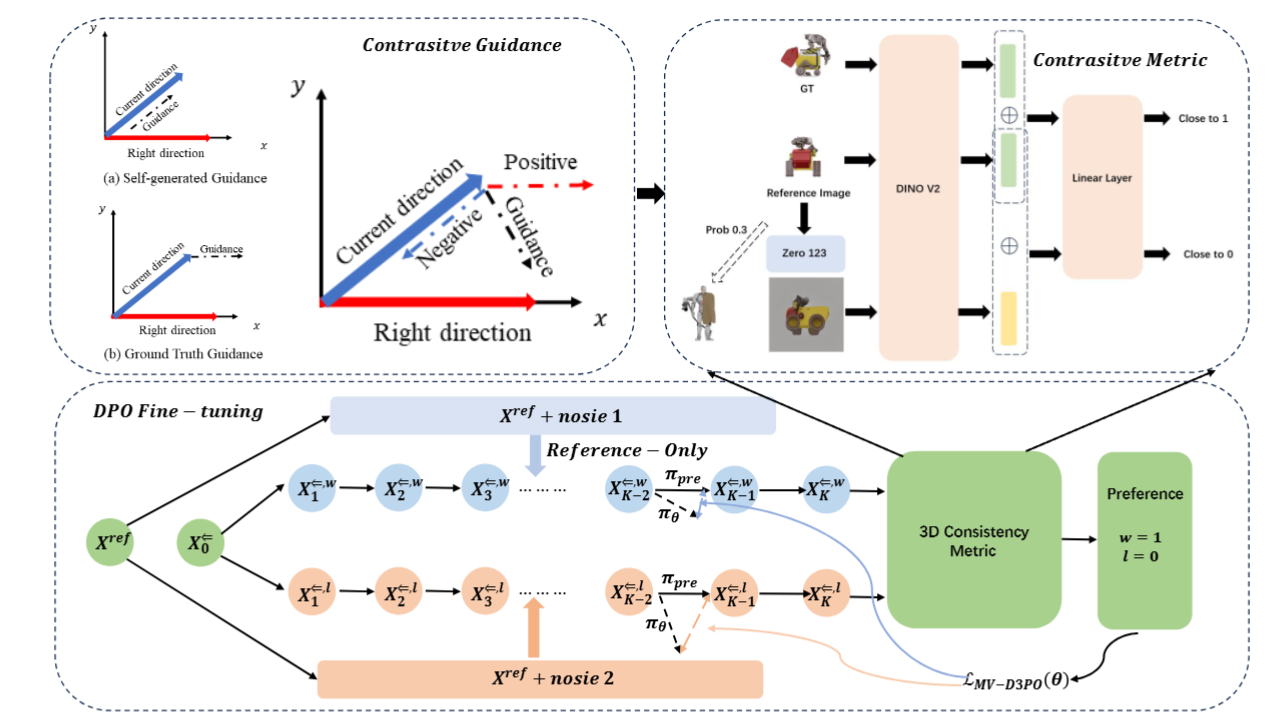
Contrastive Guidance and Feedback: A Suitable Way to Improving 3D Consistency of Multi-view Diffusion Model
Tencent IEG · Rhino-Bird Research Elite Program. Online DPO-style algorithm with group-relative reward design. We focus on how to improve the 3D consistency of multi-view diffusion models. We first model the 3D generation process and prove that contrastive guidance is suitable for 3D generation. Then we train a 3D consistency feedback using the contrastive method. Finally, we achieve strong performance by fine-tuning the pre-trained model with the contrastive 3D consistency feedback and the direct preference optimization (DPO) method.
Diffusion Model Sampling and Condition Generation
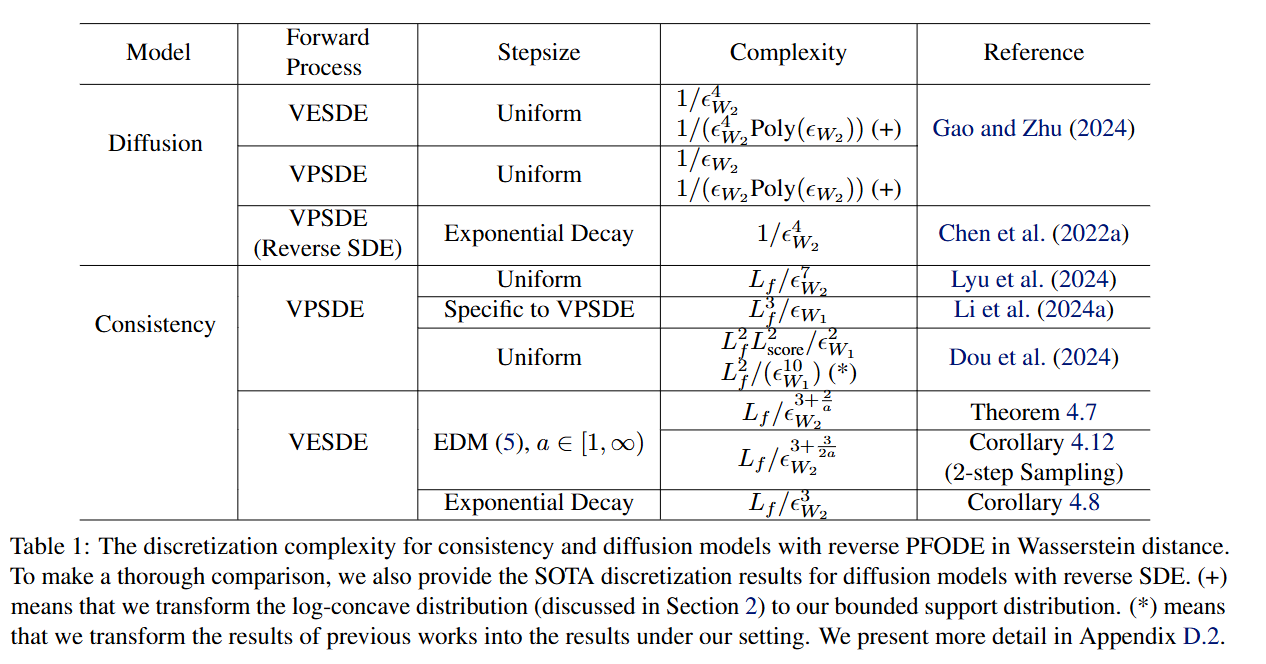
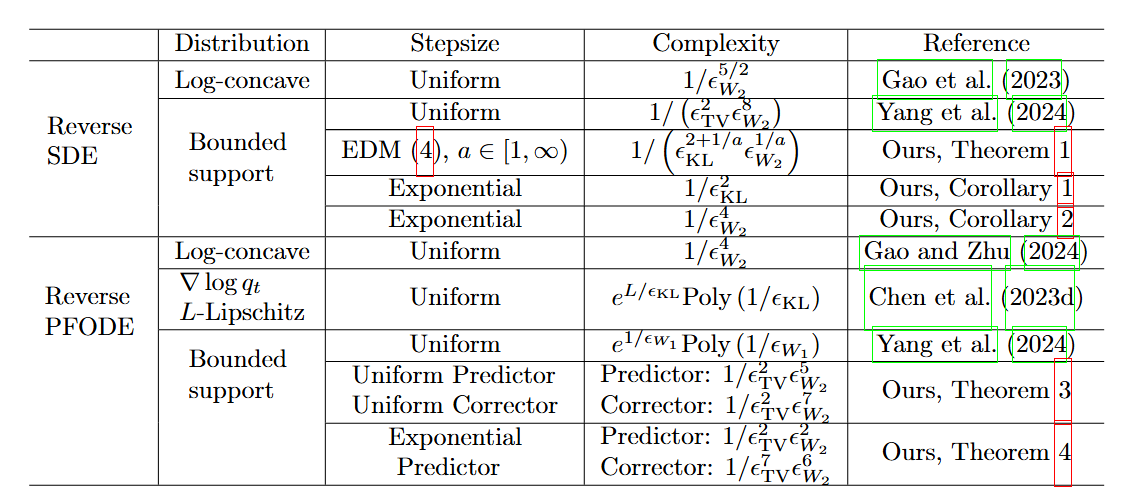
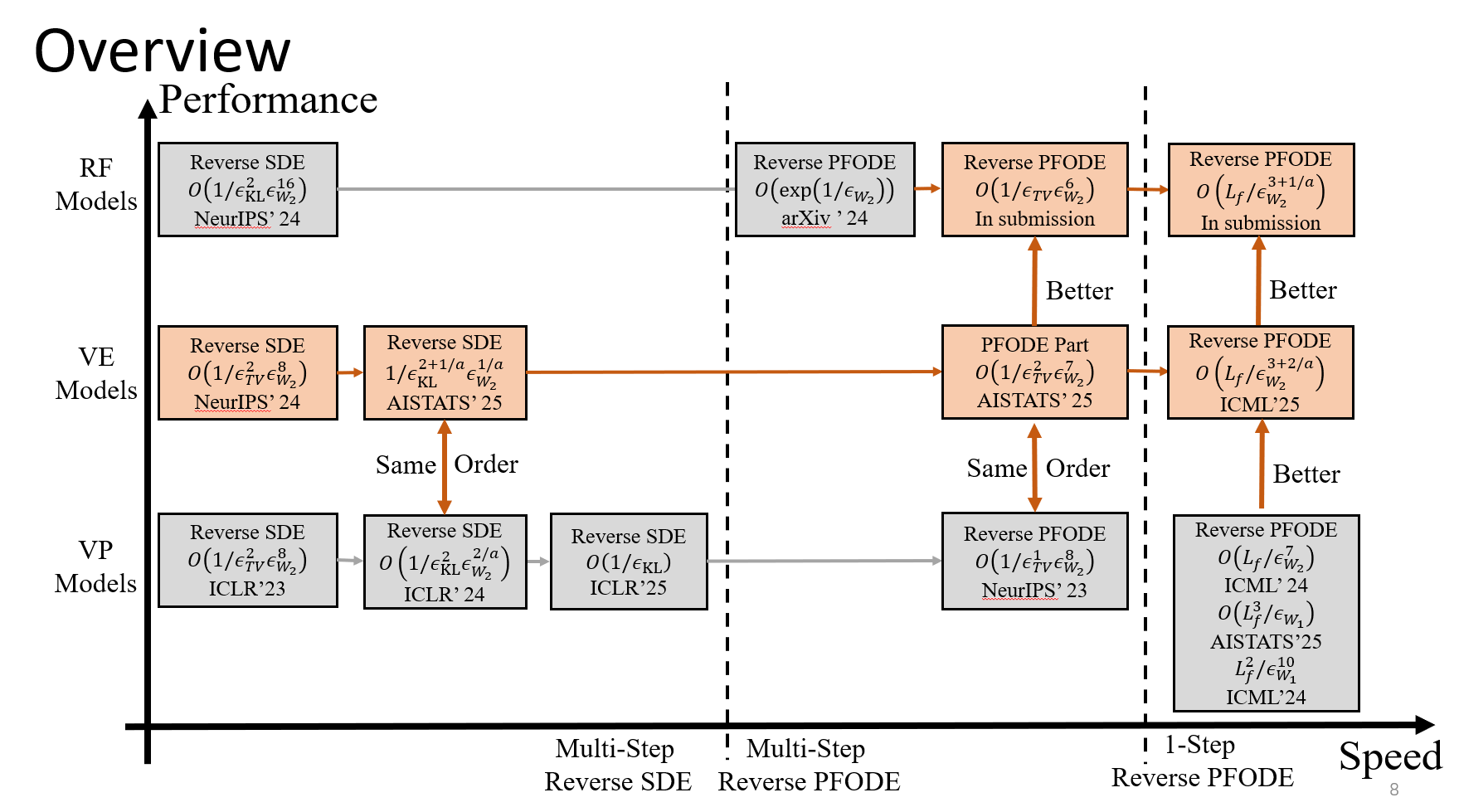
Improved Discretization Complexity Analysis of Consistency Models: Variance Exploding Forward Process and Decay Discretization Scheme